Time is the currency of the future in the fast-paced world of realty. Agents must constantly manage lead generation while also balancing marketing, communications with customers and transaction coordination. Burnout and missed opportunity are not uncommon. This is when the transformational potential of automation in the Customer Relationship Management (CRM) system is a game changer. Automating a CRM transforms it into an intelligent, active assistant that works around the clock. It can automate repetitive, time-consuming activities that consume the entire day of an agent. This allows them to concentrate their efforts to tasks that require human interaction, such as developing and maintaining relationships, making sales negotiations, and providing strategic guidance. Automating routine procedures does not just increase efficiency, it also improves reliability, decreases the chance of human error, and allows one agent or a small team to work in a manner that is comparable to a larger organization. The following ten factors detail the important role automation plays in CRMs used by real-estate agents and how they help streamline their day-to-day tasks.
1. Automated Lead Collection and Distribution
The clock starts ticking when an online lead shows curiosity. Automation ensures leads are never missed. If a form on the agent's website, Zillow.com, Realtor.com, etc. is sent to a CRM system, it immediately captures this lead's data and creates a record for the contact. Automation can be used to divide leads according to predefined rules like geography or rotation. This eliminates manually entering data, and ensures an immediate and systematic handling of any new opportunities, all the time.
2. Drip campaigns are a great method to keep leads in the loop.
The majority of leads don't want to transact right away. Contacting hundreds of leads manually is just not feasible. Automation helps with this by creating custom drip emails and SMS. The "welcome" series is able to instantly enroll a new lead in valuable content that is delivered over time. This could be an informative neighborhood guide or video on the process of buying your home. This "set-it-and-forget-it" system keeps the agent top-of-mind, nurtures trust, and methodically moves leads through the sales funnel without daily manual effort, ensuring consistent communication with the entire database.
3. Communication is triggered by behavior
Advanced automation sends specific, targeted messages based upon the behaviour of leads. CRMs can monitor the activity of a lead and then send automatic communications when a specific action is taken. When a prospect views the listing for a particular property several times, the CRM can provide the prospect additional details or listings that are similar. If a price decrease occurs on a property the lead has saved will result in an alert. It provides a user experience that is highly personalized and responsive, making the customer feel that they are being proactively served.
4. Automated Appointment Scheduling & Reminders
Agents spend a lot of time sending emails back and forth to make appointments, like consultations or viewings of properties. CRM automation works with calendar applications like Calendly or built-in calendars that allow leads and customers to book appointments directly from a link in an email or a text. The system will automatically sync with the agent’s calendar in order to prevent double booking. It can also send confirmation emails as well as reminder messages (24 and 1 hour prior to the time of the appointment) to reduce the number of cancellations.
5. Task Automation and Transaction Milestone
A real estate deal is a complex set of tasks with a variety of deadlines. Automated processes can simplify a complex procedure. When a deal moves to "Pending" within the CRM, it will automatically trigger a sequence of events, including assigning a list of tasks to the transaction coordinator and agent, sending a welcome packet to customers, and scheduling crucial deadline reminders for appraisals, inspections and closing dates. This makes sure that nothing is missed, reduces administrative stress, and provides a structured, professional experience for the client.
6. Automated Social Media Posting and Content Distribution
Time constraints often prevent brands from maintaining an active and consistent social media presence. CRM automation software can plan several postings (copyright LinkedIn) ahead of time. Agents can create a library of material - including market statistics, new listings and testimonials from clients that the system automatically publishes according to the established calendar. This will provide a continuous stream of marketing activity without the need for manual posting.
7. Autopilot Soi Nurturing
The past clients of an agent and their referral network are their most valuable source of business prospects. It is impossible to manually stay in touch with a large number of contacts. Automation makes the task effortless. The CRM is able to invite customers from the past to join an ongoing nurturing campaign. It is able to send them holiday greetings and messages on the anniversary of their wedding. It can also request reviews and referrals in the aftermath of a transaction. This nurturing system keeps relationships and automatically generates the possibility of repeat and referral business.
8. Automated reporting, Performance Analytics, and Performance Reporting
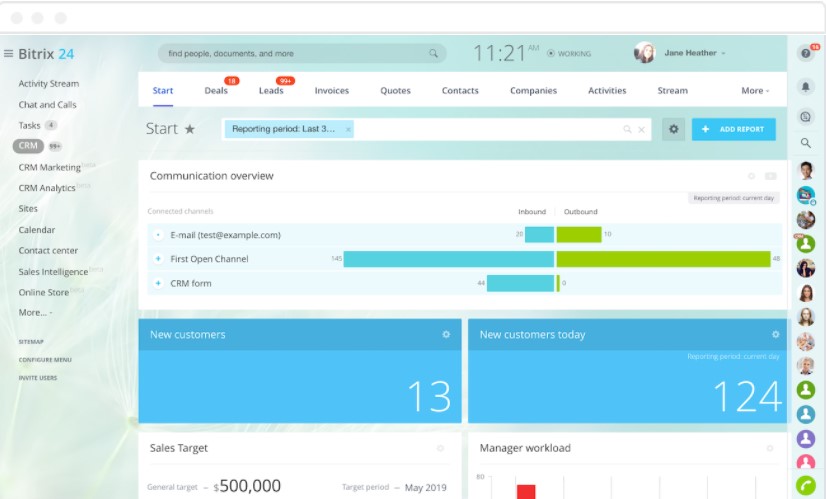
Understanding business performance is key to growth, but compiling reports manually can be a tiring job. The automated reporting functions within CRMs will create and deliver KPI reports to the inbox of an agent or broker every day, weekly or monthly. These reports can contain data on lead generation, conversion rates and pipeline value as well as closed sales. The data-driven insights allow for quick and strategic changes.
9. Automated Alarms and Notifications
A team's alignment requires continuous communication. Automating this process internally streamlines it. The CRM can be configured to automatically notify a transaction coordinator when the new deal is added to their pipeline. The CRM will alert a team leader if an important lead has not been active for a specified period. This triggers an automatic follow-up. It can also remind an agent to finish the task in time for the deadline. This results in an automated seamless workflow that enhances accountability and teamwork.
10. Automated Document Generation and E signature Requests
The paperwork involved during a real estate transaction is huge. Automation makes this easier with pre-built templates that make documents such as buyer representation agreements as well as listing agreements and disclosure forms. Once these documents are generated, they can be automatically sent to clients using secure URLs and an eSignature request. It tracks the status by delivering automated reminders until the document is signed. This makes it easier for signing documents and printing them, and then chasing the signatures down. This accelerates the business pace and creates an complete digital experience for everyone. Check out the top rated real estate crm software url for website examples including automation in sales, marketing for realtors, sales crm tools, crm data, crm systems for realtors, real estate customer management software, crm clients, sales crm tools, marketing automation platform, ai and crm and more.
Top 10 Tips For Pricing In Real Estate Crm And Roi Evaluation
Pricing for CRM software is a bit nebulous with options that range from affordable monthly costs to large investments. For brokers, agents, and other professionals, it is essential to know the total price of a CRM software package, which is more than the price advertised. The real value of CRMs isn't its price, but rather the value it offers through increased efficiency, better conversion rates or closed transactions. A platform that is cheap and does not get used is a complete cost-saving option. On contrary an efficient and robust platform will easily cover its own expenses. It is essential to understand the full scope of the cost involved in reviewing the value of a CRM. This includes both indirect as well as hidden costs. Real estate professionals can surpass feature comparisons using a framework that calculates ROI. The following 10 points will help you understand real estate CRM costs and the financial impact they have.
1. Subscription models based on the per-user model, which is a tiered pricing (The most commonly used model).
Pricing for real estate CRMs typically is a subscription-based model that is broken down into levels (e.g. Basic Pro, Enterprise, and Basic). The per-user cost often decreases by choosing an annual subscription. The "Basics" level may provide the basics of task and contact management while higher levels will allow advanced automation, integrations and marketing tools. The "gated features" of higher tiers must be evaluated to determine if they're necessary to your workflow. Total cost equals the per-user fee multiplied by number of licensed users.
2. Platform-Wide flat-rate or "Unlimited user" pricing
Certain CRM providers, particularly those that are integrated into a bigger real estate platform like KV CORE (or similar), offer the option of a fixed-price pricing system. Instead of charging per agent, the brokerage will pay a one-time monthly fee. This is a feasible model for large teams because of the cost per user being low. It might not be a good fit for a single agent or small team, since the flat cost can be substantial and features are standardized throughout the company.
3. Fees for Onboarding, Implementation and Training
Subscription fees may not be the only expenses. Many providers charge one-time setup costs or implementation charges for establishing your system. In addition, professional onboarding and learning services are often provided as an add-on for a fee. Although basic training could be included, it's strongly recommended to invest in customized and in-depth training for a successful adoption. This should be factored into the initial cost of your expenditure. The cost of training isn't always necessary however it is an effective way to cut expenses.
4. Costs of Third-Party Integration
The price of a CRM's base might not include the costs of the tools it is connected to. If you require a crucial integration, like a direct MLS Feed or a premium email marketing Service (e.g. Mailchimp Pro) or the VoIP phone system (e.g. Kuku.io), the Transaction Management Software (e.g. Skyslope), These services typically require separate subscriptions. To determine the total cost of CRM it is important to create a comprehensive list of the features required and the monthly costs.
5. Limits to Contact Databases for Contacts and Storage
Some CRM tiers have limitations on how much you can save. Exceeding these limits can trigger the need to upgrade to a higher priced tier. Agents with a high Sphere of Influence or who employ an aggressive approach to lead generation will often discover that a solution that allows unlimited contacts is worth the cost to avoid any future restrictions and price increases. Before making a decision, make sure you know the limits of contacts as well as the price for extending the number of contacts.
6. Calculating ROI based on Lead Conversion Value
The most direct method to determine ROI is through a higher lead conversion. To begin, it is necessary to establish an initial baseline. What's your current conversion rate from leads to clients and what is your average transactional commission? If a CRM costs $100 per month, and to convert one more lead each year from a plethora of 100 leads, and your average commission is $10,000, your gross return is $10,000. The ROI is significant: (($10,000-$1,200 annual CRM costs) / 1,200) 100 = 733 %. Just one percent in conversion is enough to justify an investment of a substantial amount.
7. Calculating ROI: Time Savings and Efficiency Gains
Time is a non-renewable resource. A CRM's automation features help you save time each week by avoiding manually-based tasks such as the entry of data, following-up emails and even marketing. Add the number of hours you've saved each week by your preferred hourly wage to quantify. If your time is worth $100 per hour but the CRM can save you 5 hours per day, that would be $500/week. or $2,000 per month. The time saved could be invested in revenue-generating activities such as lead generation or client meetings, creating an impressive yet less tangible return on investment.
8. Calculating ROI: Increased revenue through Sphere of Influence
The primary purpose of CRM is the systematization of maintaining past clients and referral sources. ROI can be measured through an increase of repeat and referral customers. Keep track of the percentage of business as well as the value it generates that is derived from your SOI. If you see your referrals rise by 20% due to automatic birthday messages, anniversary touches or market updates it could be attributed to the CRM's nurture capabilities.
9. Evaluation of the "Opportunity cost" of not having a CRM
ROI isn't only about the money earned, it's also about ensuring that money is not wasted. The "opportunity" price of not having CRM is the loss of value from leads due to slow follow-up. It also refers to referrals that were neglected by a neglected SOI. These costs are real and hard to quantify. A CRM can be an investment in preventing these losses, securing business that would otherwise go to more organised competitors.
10. The Long Term Value of an Asset Centralized in a Business
In the end, the return on investment of a CRM is more than one year. Maintaining your CRM properly will make it the most valuable asset for your company. Each time a new contact is added, and every transaction and interaction the value of the CRM increases. This organized intelligence helps your business grow and more marketable. It also makes your business less dependent on one individual's memory. Although it's not part of the profit-and-loss report the long-term strategic advantage is crucial to building an enduring and profitable real estate enterprise. Read the top rated real estate crm software advice for more examples including marketing for realtors, freeware crm software, crm close, crm programs for realtors, crm for small companies, crm means what, leads for realtors, good crm software, marketing for realtors, crm and marketing automation and more.